- Year
- 2024
- Category
- Exhibition
- Exhibition Authors
Zrinka Buljević / Katarina Jovanović Eterović / Jagoda Mardešić /Josipa Marić / Ana Marinović / Vesna Matić / Nino Švonja /Ema Višić-Ljubić
- Exhibiton design
Clinica Studio
- Client
- Archaeological Museum in Split
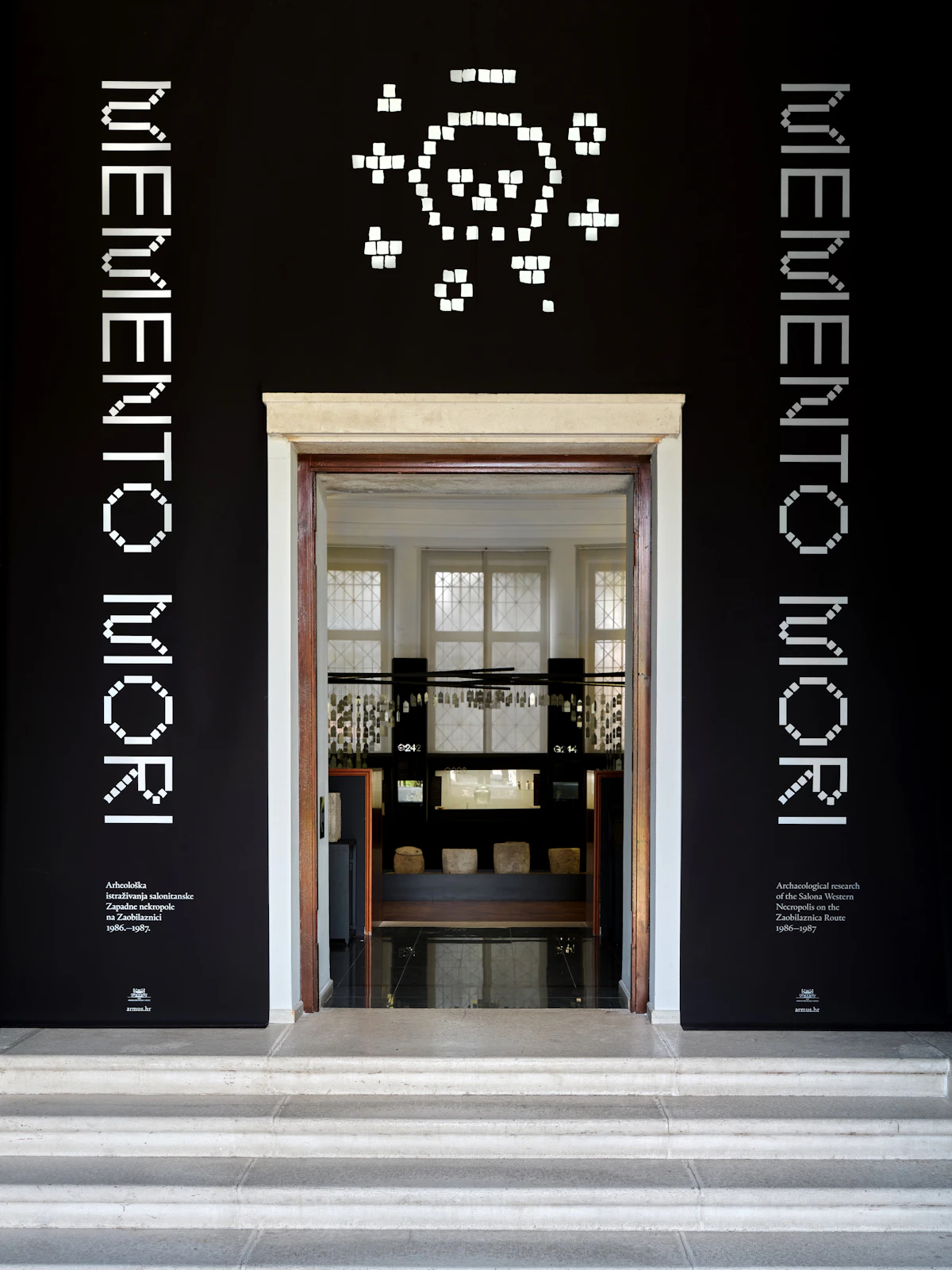
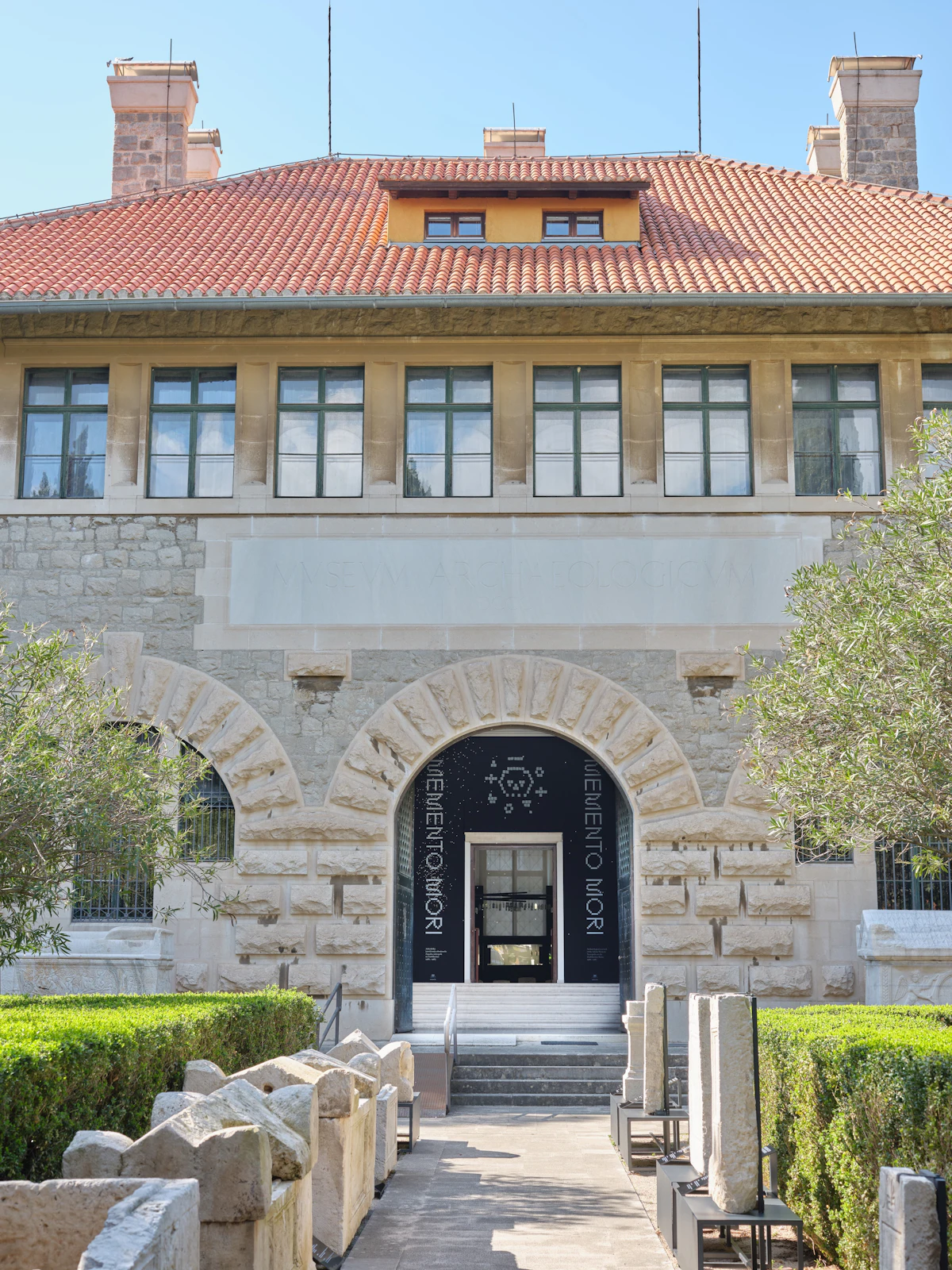
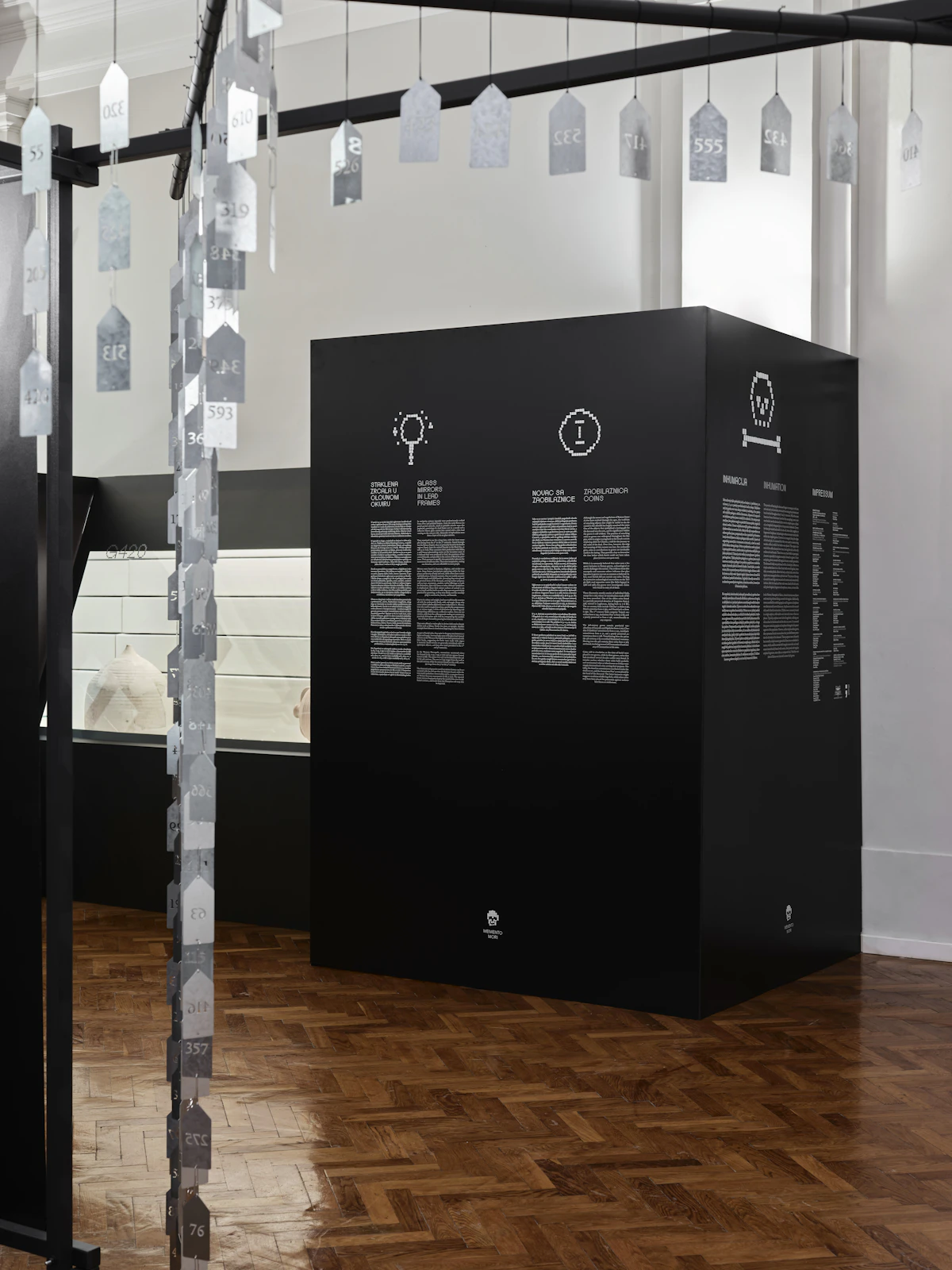
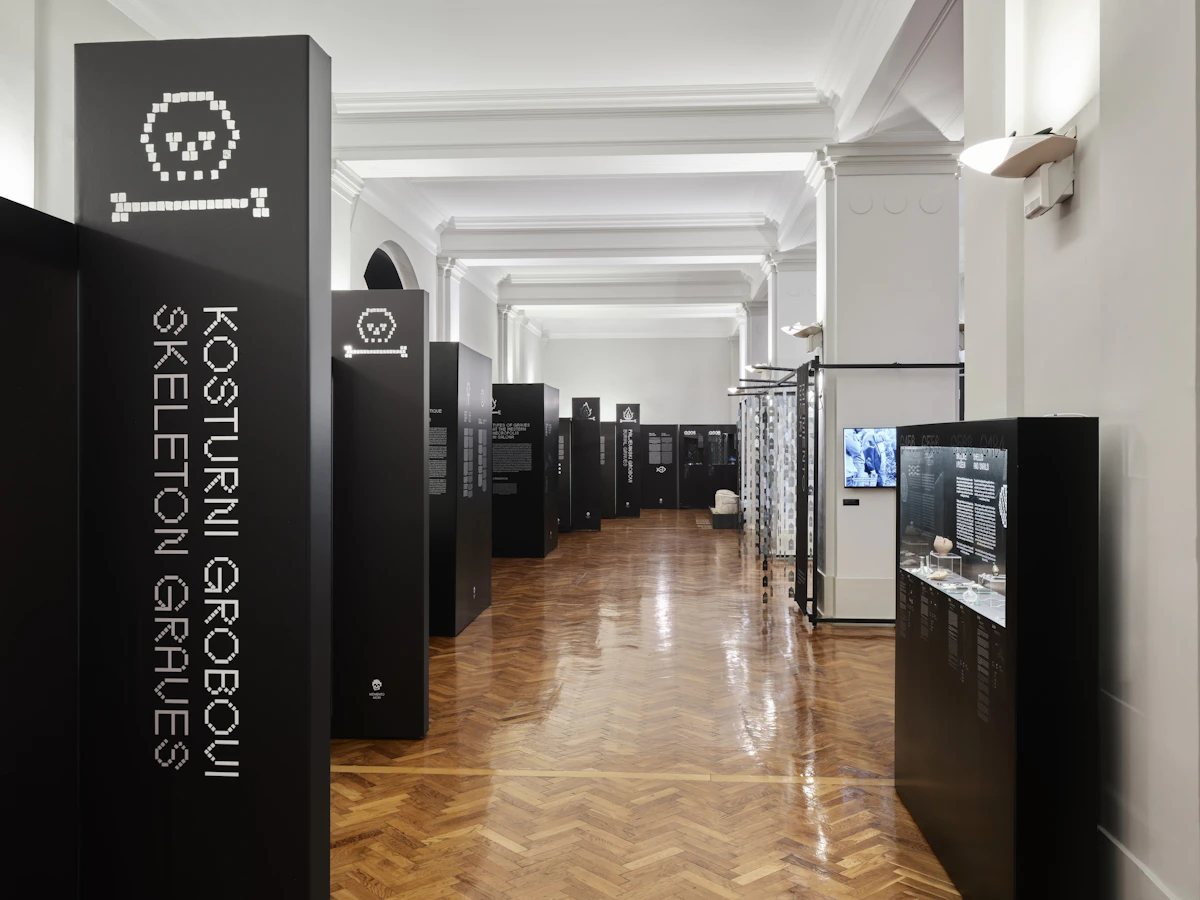
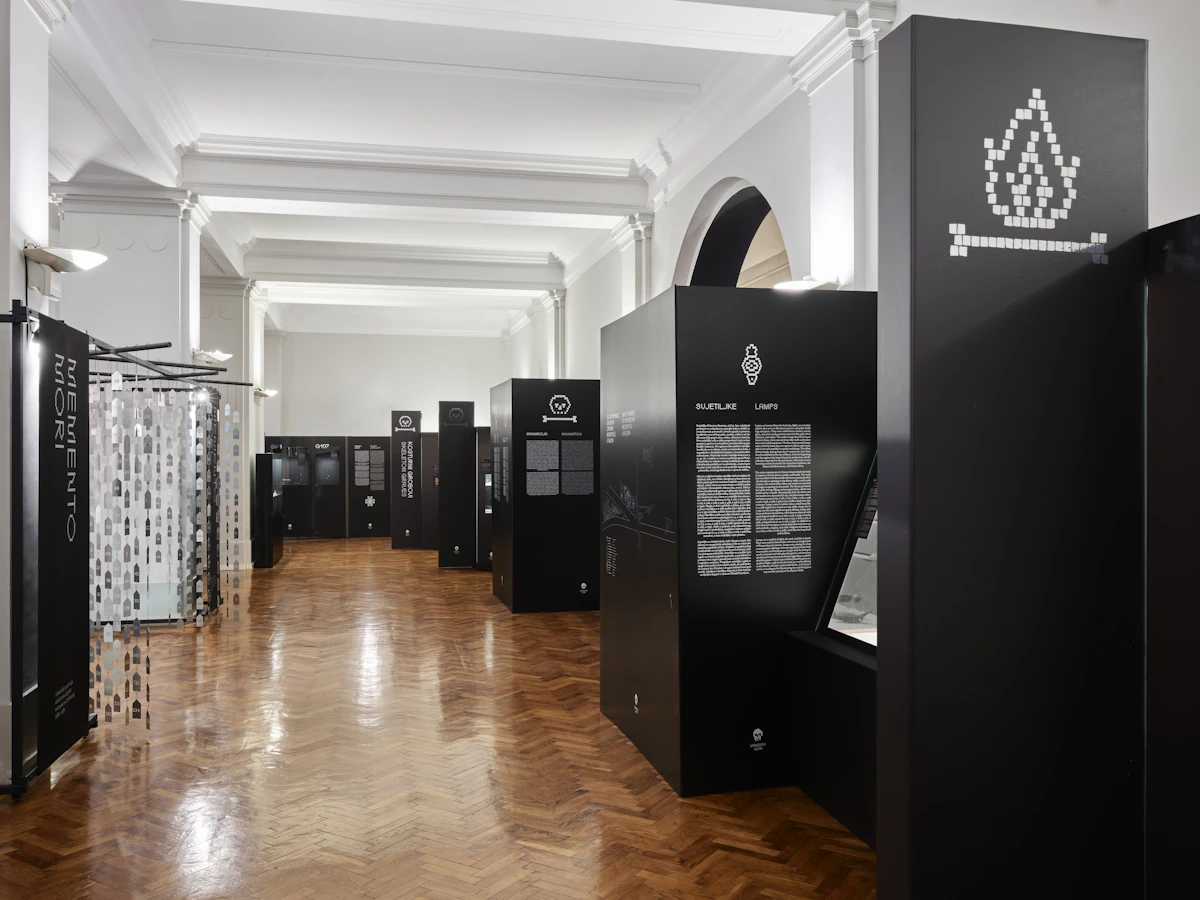
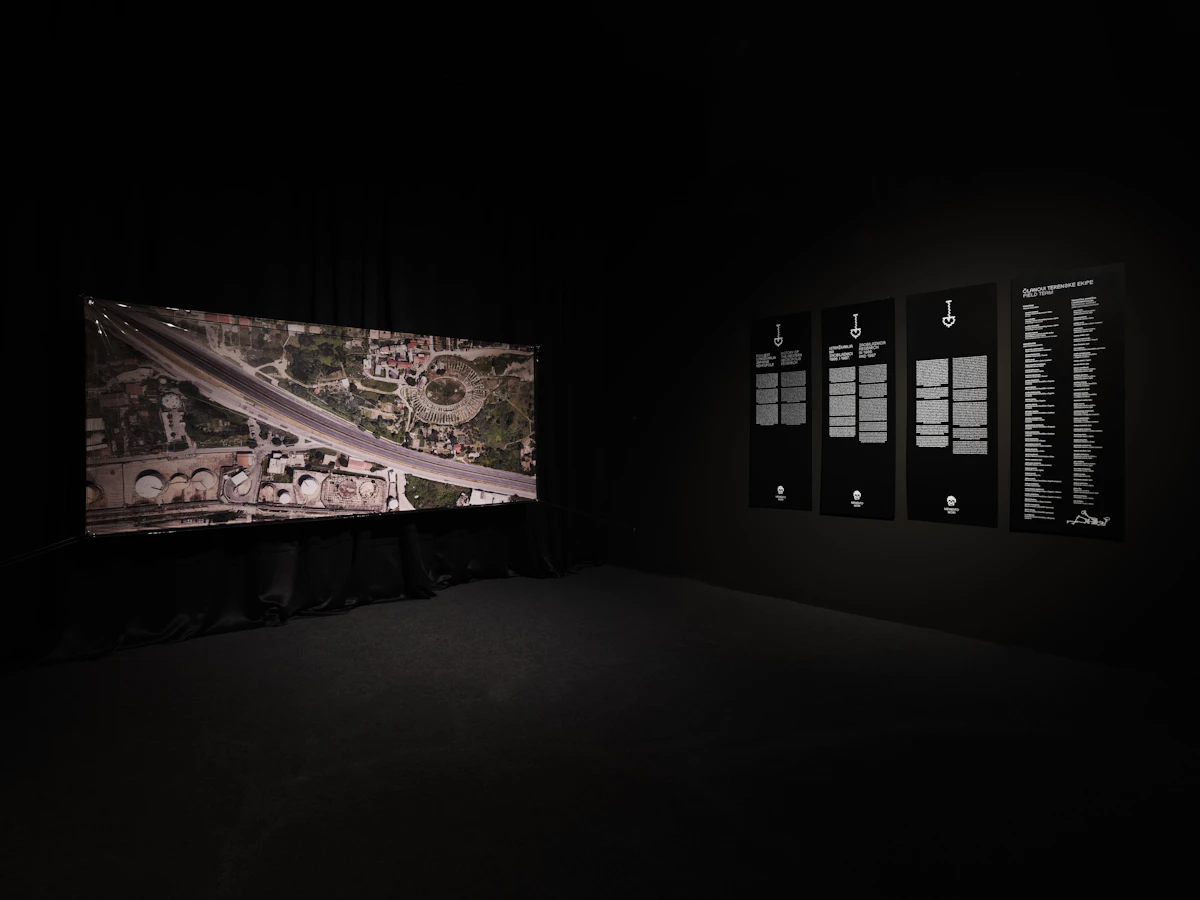
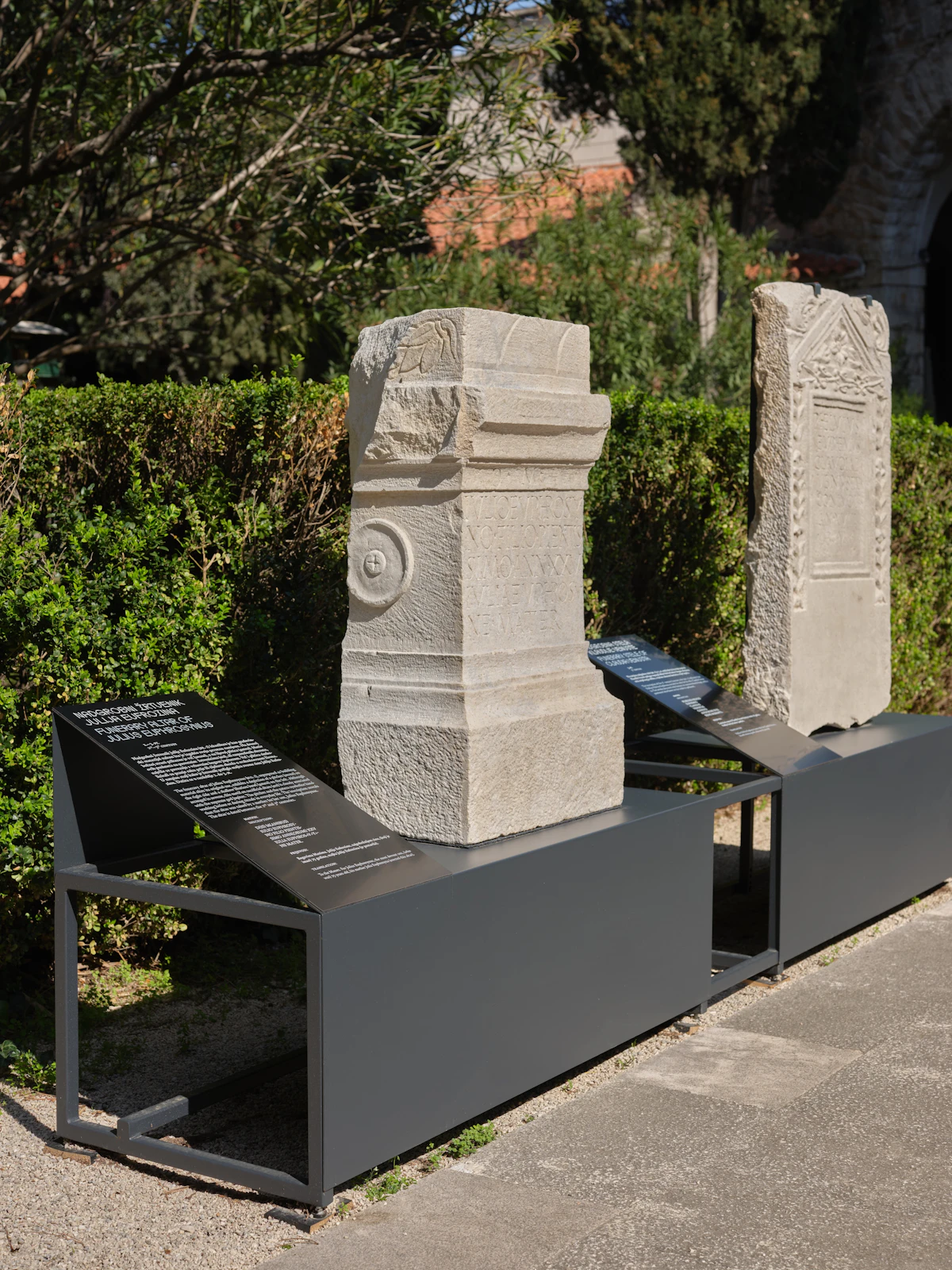
The exhibition "Memento Mori" presents archaeological research into the Salona Western Necropolis on the Solin Bypass, carried out from 1986 to 1987. The Archaeological Museum in Split shares the discoveries from this remarkable treasure, uncovered by archaeologists during the building of the Solin Bypass in the 1980s. Analyzing, scientifically processing, interpreting and contextualizing thousands of exceptionally valuable archaeological finds took nearly 40 years. With all of this work complete, attention turns to the story of the Salona residents buried in the Western Necropolis. Their stories come to us through the analysis of 615 graves (dating from the 1st to the 6th century) and a group of stone monuments. This knowledge has deepened our understanding of ancient Salona and settled some earlier scientific uncertainties.
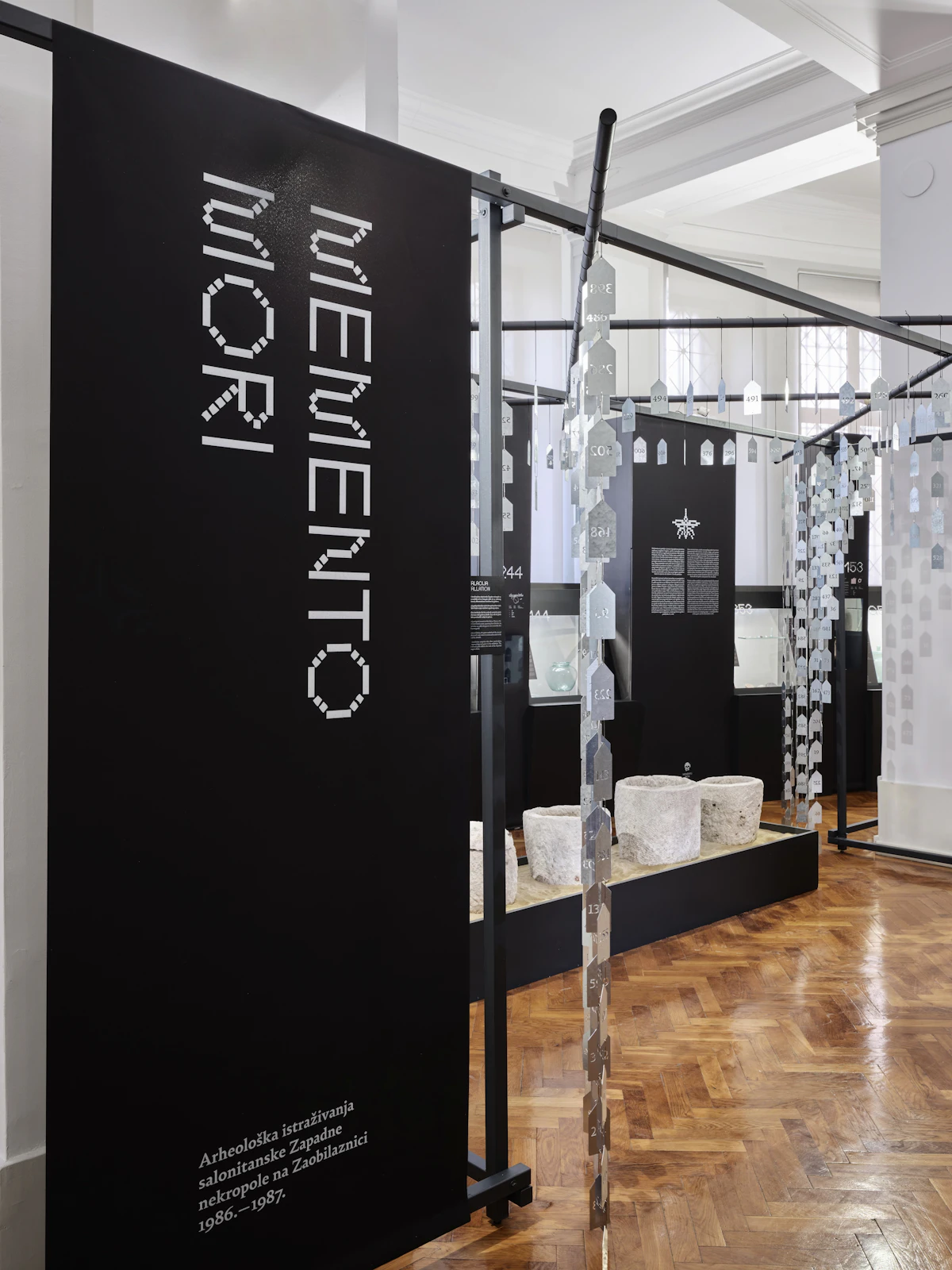
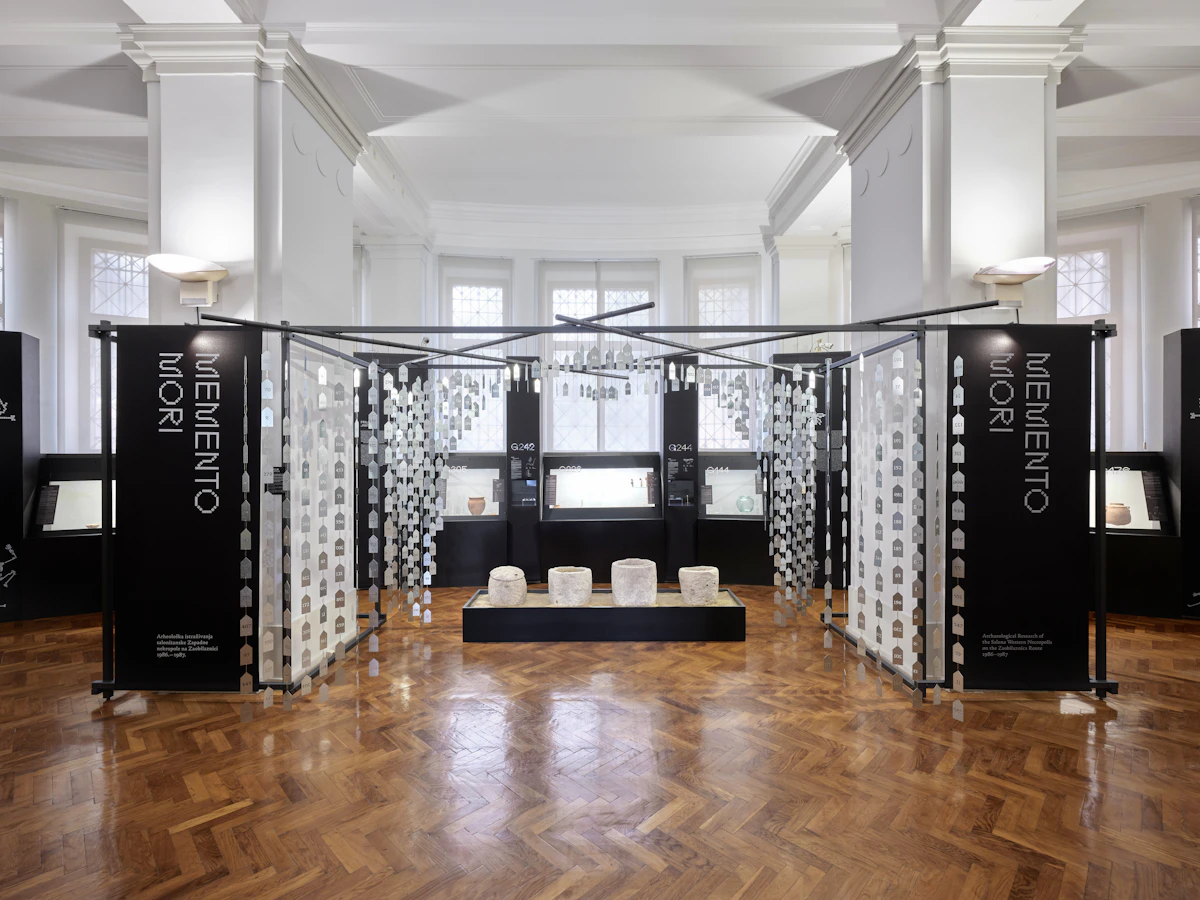
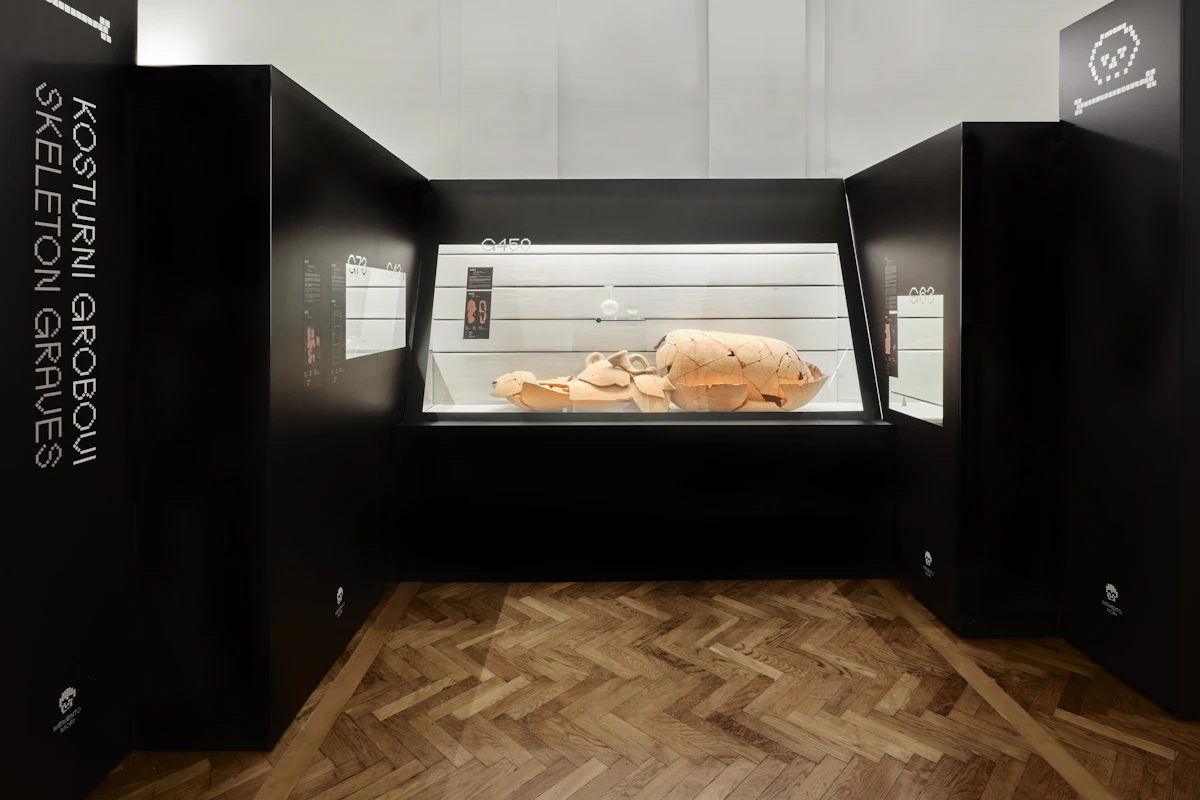
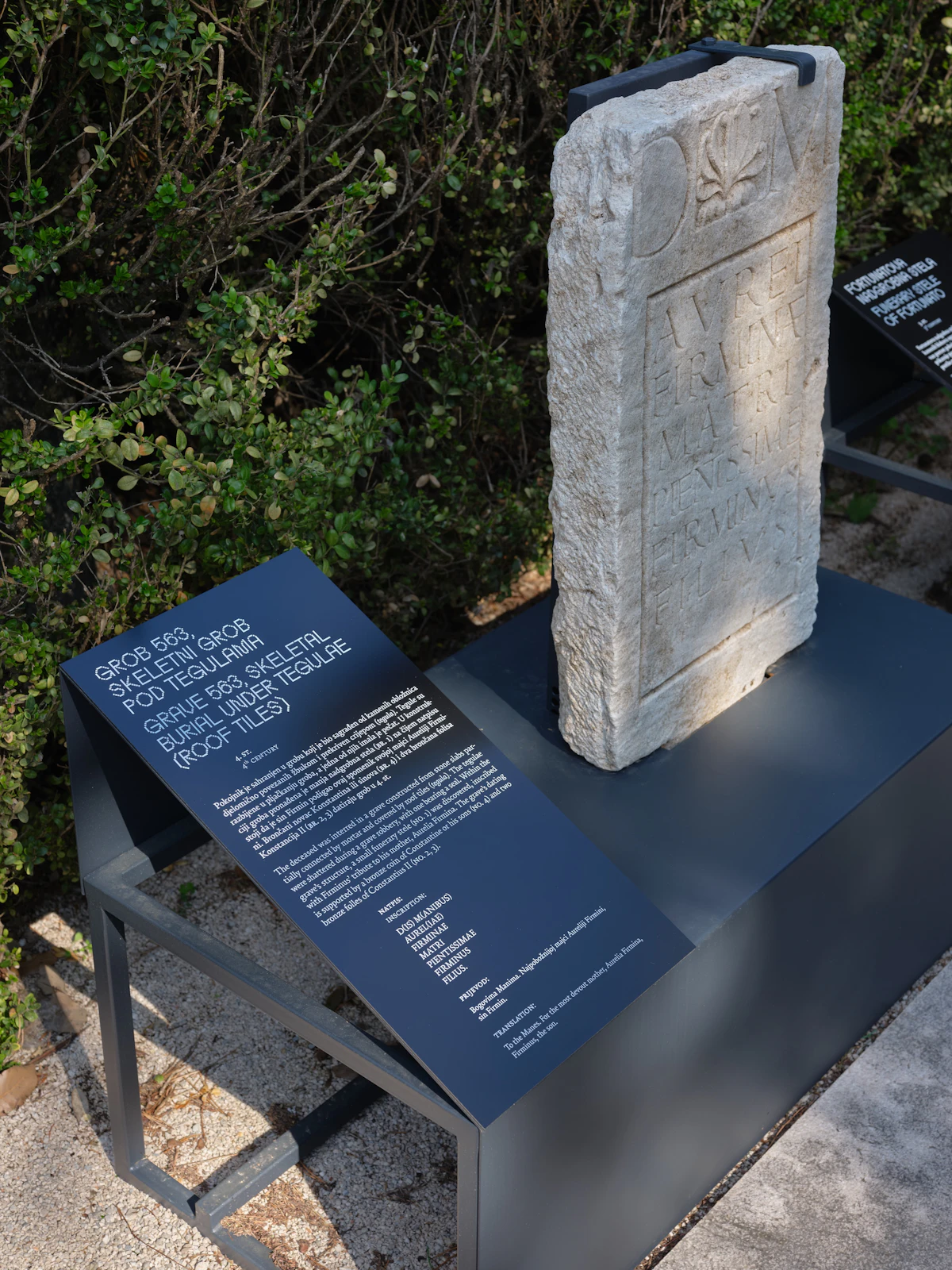
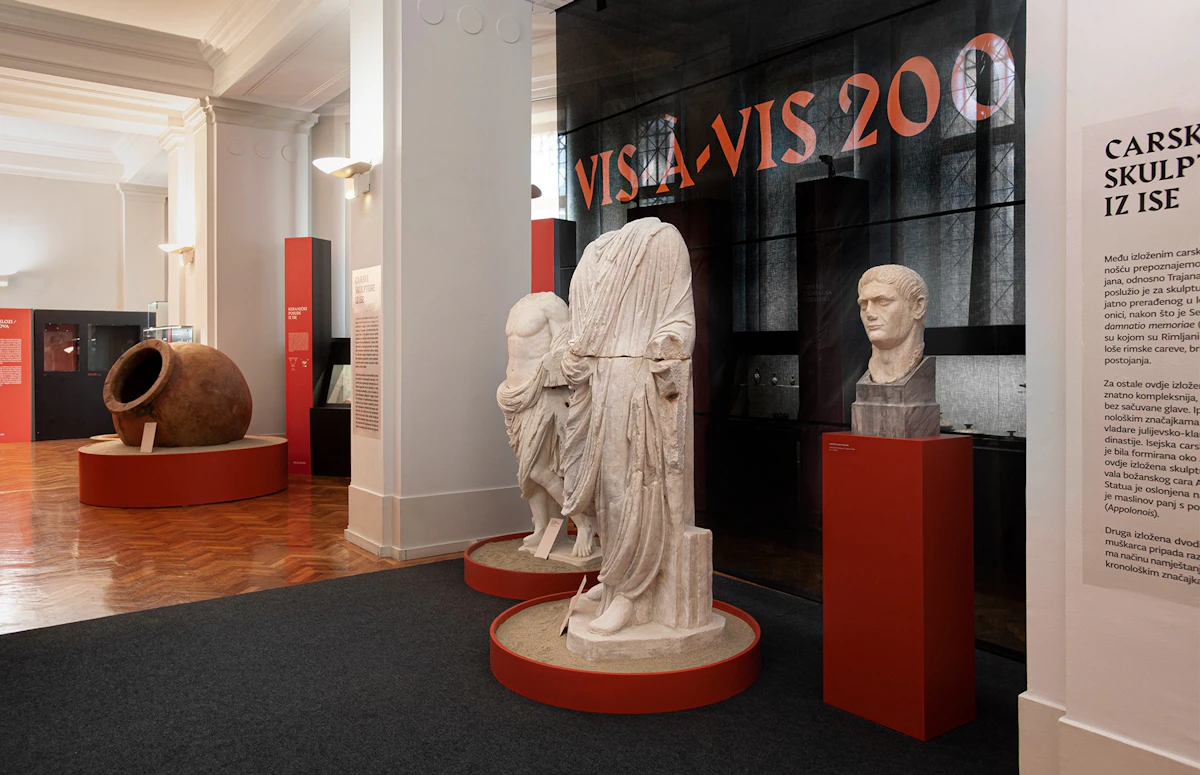
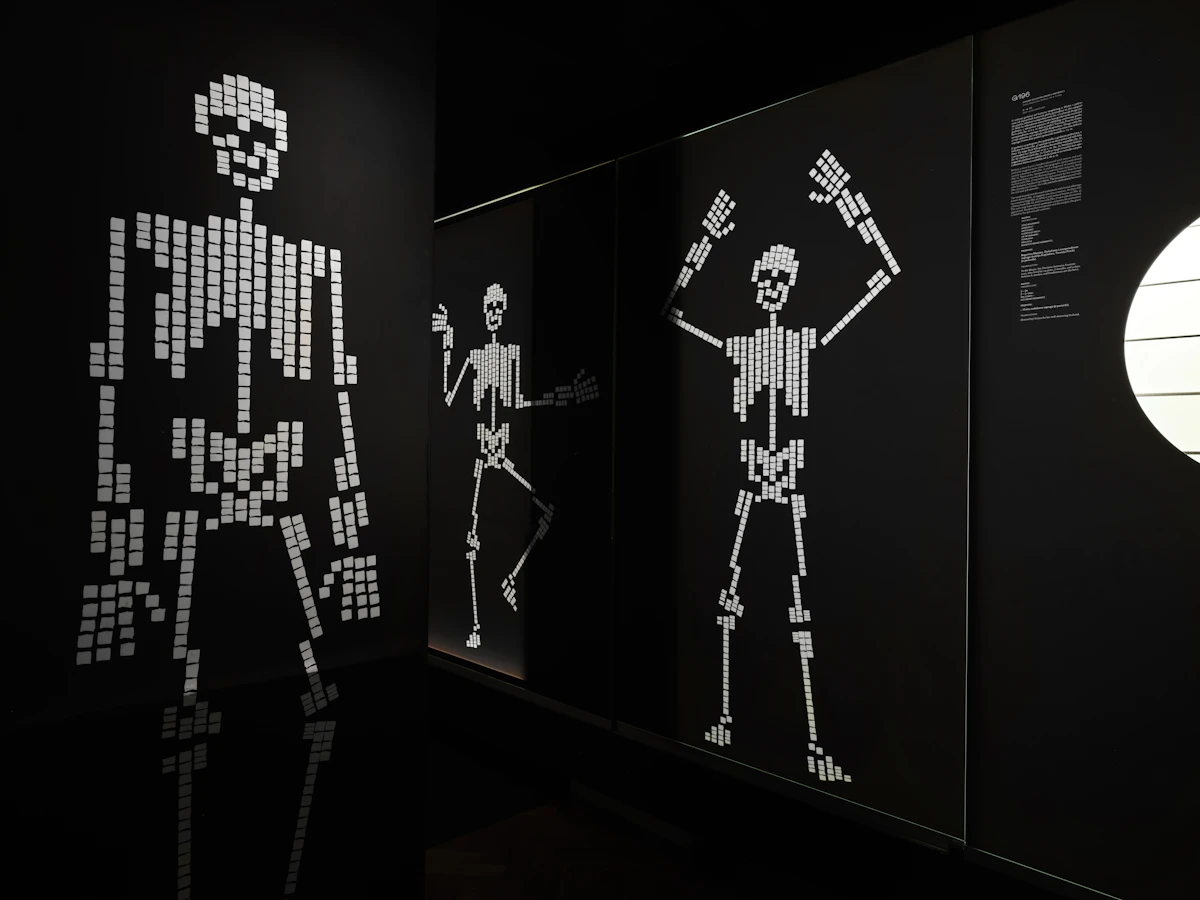
The exhibition unfolds along two main lines. One section is devoted to the research itself, while the other displays objects recovered from the graves. These objects reveal the burial customs of the Salona residents, and from those burial practices we can infer what they valued in life. And there is more. With the help of modern technology, four individuals have been reconstructed, showing the public for the first time what they looked like.
The "Memento Mori" exhibition does more than revive the past through the story of death and the customs of Salona's residents across six centuries; it also considers what the discoveries mean today. It is a journey through our own identity, revealing secrets of the past and linking them to our present. The recovered remains act as messengers from another time, reminding us how fragile life is and how important it is to be grateful for the present moment. That is why the Latin phrase in the title, meaning "Remember death," becomes a central theme, inviting visitors to a deeper appreciation of the present, of life itself, and of cultural heritage.
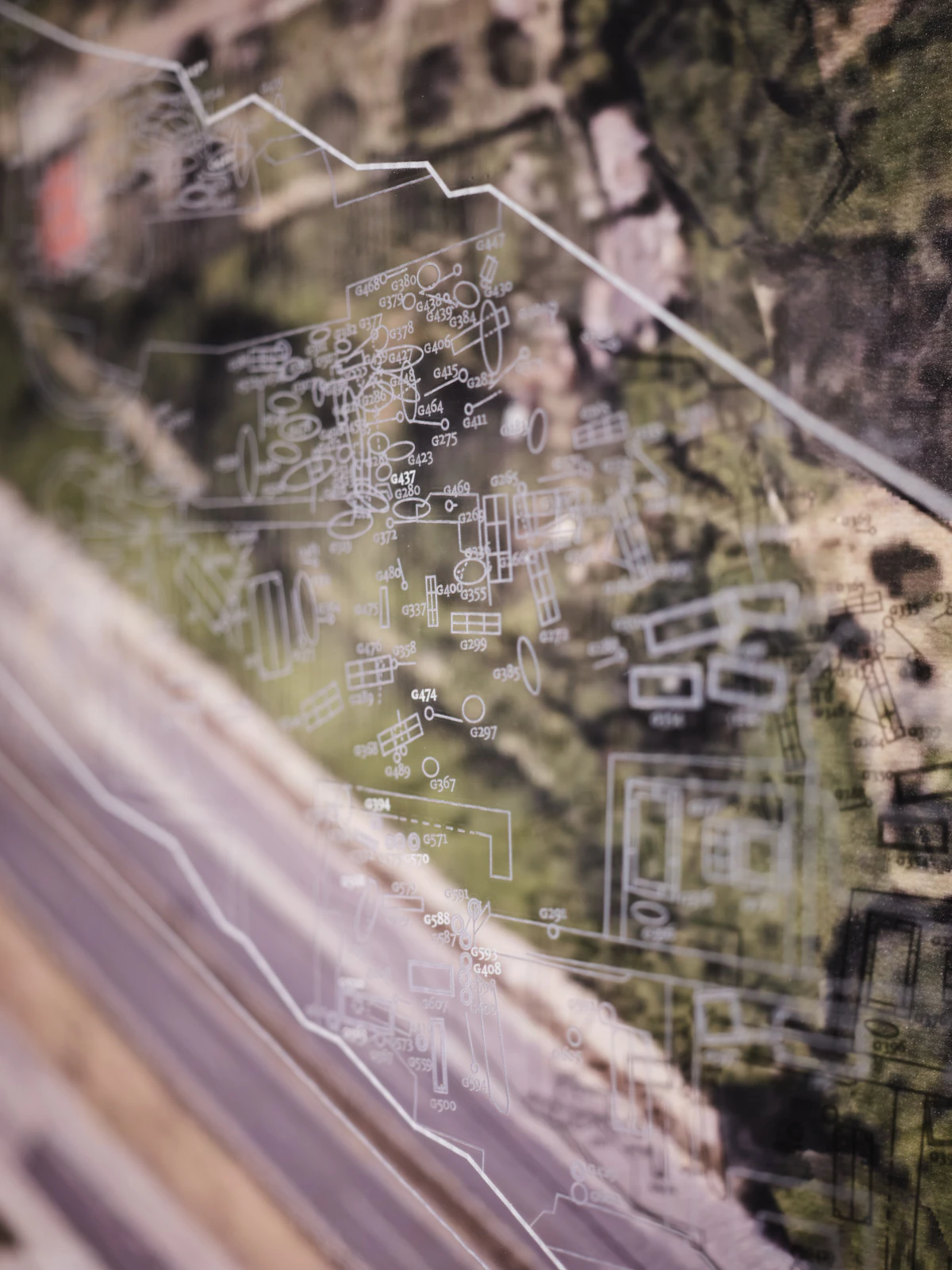
So how did it all start? While the Solin-Trogir expressway (known as the Bypass) was being built between October 1986 and November 1987, a team of archaeologists carried out protective excavations. What they uncovered left them breathless and set off a dramatic struggle to protect the past from the demands of the present. The site was already known as the Western Salona Necropolis, but only then did its full splendor come to light, as seemingly silent witnesses of time spoke through the dust of centuries. Working with superhuman effort against both time and public pressure, the archaeologists rescued a substantial share of the finds, which were placed in the Archaeological Museum in Split. Since then, the artifacts have been cleaned, restored, analyzed, interpreted, scientifically processed and readied for public display.
The remains of ancient monuments and graves uncovered the secrets of life in the great ancient metropolis of Salona. We discovered key details about the city and formed an intimate connection with the people who once lived in this very place. This exhibition takes us deeper into history through archaeological finds, treating each piece as a portal in time, uncovering fates waiting to be told and building a bridge between past and present. Seen through the lens of archaeology, we become explorers of our own identity.
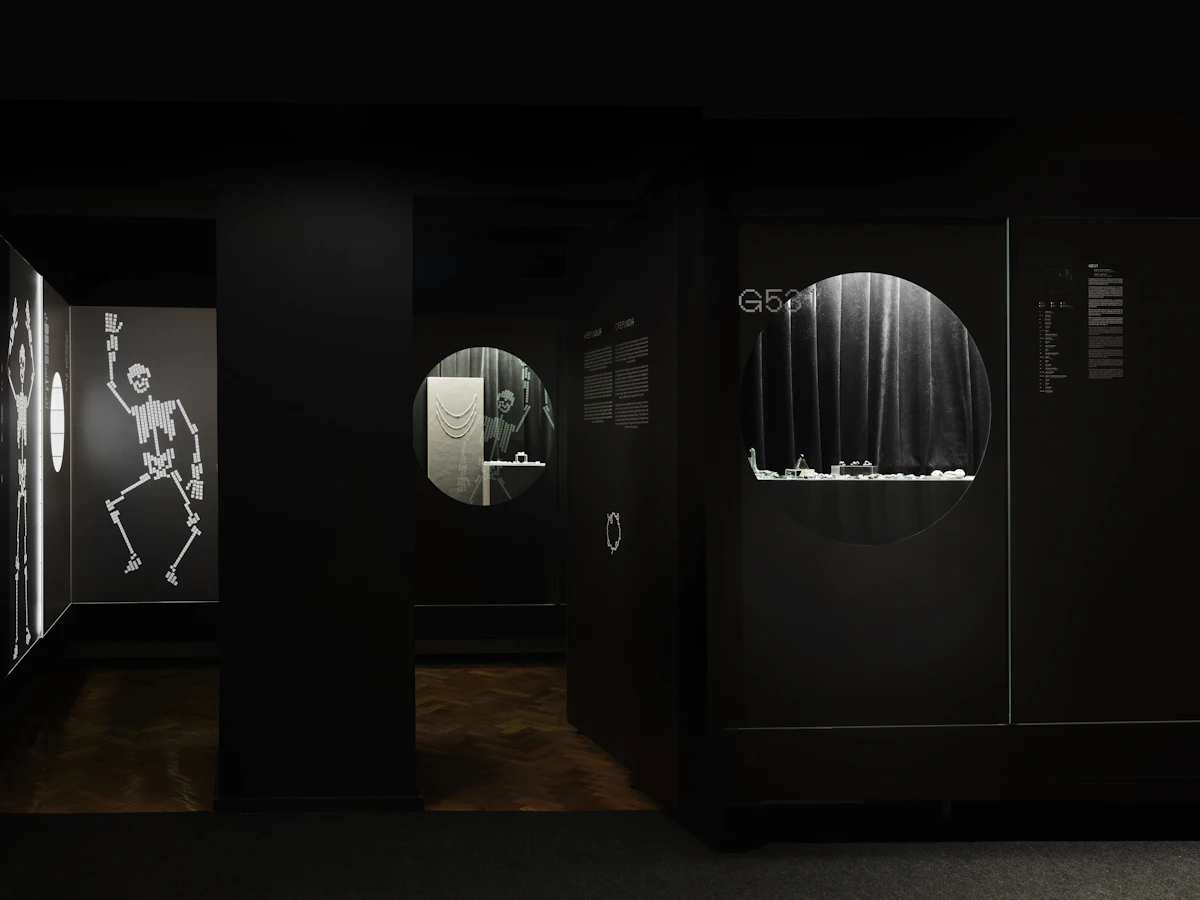
memento mori
This exhibition takes us deeper into history through archaeological finds, treating each piece as a portal in time, uncovering fates waiting to be told and building a bridge between past and present. Seen through the lens of archaeology, we become explorers of our own identity.